
Faced with a choice between overpriced mall stores or low-quality fast fashion, Gen Z has revitalized a once-popular option: thrifting.
Thrifting is everywhere—it’s on social media, lining Tampa’s streets and roaming the halls of Plant High School. A vintage top, paired with painted-on jeans, a patchwork sweater or baggy jeans held up with a shoestring. Behind each piece of clothing lies a rich history, filled with memories of friends laughing or the hours spent transforming a $2 t-shirt into a masterpiece.
Thrifting originated during the Industrial Revolution, when clothing was handmade, reused and recycled repeatedly. An old dress was turned into a skirt; when that skirt developed holes, it was turned into dish rags. When those dish rags became too tattered for use, they were used to stuff furniture.
As clothing became mass-produced with machines, this cycle of reuse slowly faded; clothes became disposable rather than reusable.
With the newfound expendability of clothing came the rise of thrift shops. They found their beginning with the Salvation Army’s “Salvation Brigade,” eventually turning into the thrift stores we know today.
Thrifting became popular once again in the 60s and 70s, where thrifters “rebelled” against mainstream fashion in favor of personalized and individual looks.
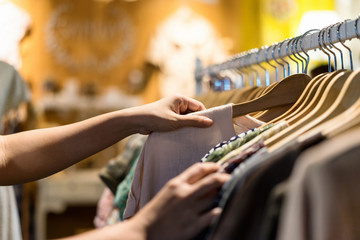
Today, thrifting takes many forms. It can look like buying something on Depop or eBay, apps where individual sellers put items up for sale. It can be flipping through endless racks in search of the perfect item or tearing up a dress to create something new.
Thrifting is incredibly popular, with approximately ⅓ of clothing purchased in 2024 being secondhand. It wasn’t always so popular, however. In the 2000s, “logomania” ruled, with luxury brands and logos being seen as fashionable. Thrifting was seen as a lesser option, reserved for those who could not afford to shop name brands.
Instead of shopping secondhand being a point of shame, it’s now a badge of honor. Social media sites like TikTok and Instagram are filled with “thrift hauls,” a tag that has almost 900,000 posts under it. Teenagers proudly show off their thrifted outfits and thrift flips, exposing the idea to even more people.
Additionally, fast fashion is on the rise. Fast fashion refers to clothing that is produced quickly and cheaply, feeding into trend cycles and often rife with controversy. Amid growing concerns about overconsumption, environmental effects and child labor violations, many teens have shifted to thrifting.
“Fast fashion is terrible for the environment,” said Elliana Bland (12). “So, I feel like thrifting is kind of a way to dodge all that, you know? It’s really a good way to buy your clothes. A lot of these big companies don’t care about your Earth, so I feel like it’s kind of in our hands now to be able to protect our planet.”
At the same time, thrifting isn’t a catch-all. Many, when dropping off old clothes at a thrift store, think that those clothes are going directly to someone who needs them. In reality, they can go to any number of places, with only about 20% being put out on thrift store floors, according to the National Institute of Standards and Technology.
A small portion of the remainder is recycled, while the rest is burned, thrown into landfills or shipped to underdeveloped countries, a practice that has been hotly contested due to its devastating effects on local garment industries.
In addition, thrifting can mirror the overconsumptive mindset that plagues fast fashion. The low price tag often leads people to buy clothing they don’t need, just like fast fashion.
Resellers also plague thrift stores, turning a leisurely weekend activity into a fight as regular consumers compete with resellers sweeping stores, selling their finds for almost or above-retail prices. It isn’t just that resellers take more than they could ever use from multiple stores—they also drive prices for regular shoppers looking for affordability.
“I hate resellers,” said Sophie Girenkova (12). “I think the whole point of thrifting is to be affordable. You even see thrift store prices going up because resellers are coming in and scalping everything, which is destroying the whole point of thrifting.”
Although thrifting has some drawbacks, there are still numerous positives—and other options. The Spring of Tampa Bay, for example, has a thrift store whose profits support efforts to help victims of domestic violence and their children. Furthermore, instead of contributing to the cycle of trends and overconsumption, thrifters can think critically about whether they really want to buy and wear a piece they find in a store. With extra clothes, you can organize a clothing swap and foster a greater sense of community with your friends and neighbors.
Instead of clothing being thrown away or donated, it can be reused. Bland participates in “thrift flipping,” a process where old clothes or thrift finds are given a new life through personalization.
“Maybe there’s an old pair of jeans that look like they can never be worn again because they’re falling apart…you can turn them into a nice little bag and give them a new life and just make sure that they stay out of the landfill,” Bland said.
Bland is also a member of the Second Stitch club at Plant, a club dedicated to giving clothing new life.
Second Stitch represents the union between the history of clothing and the history of thrifting—they repurpose old clothing and customize their thrift finds into something that they will cherish in their closets for years to come.
“Second Stitch is basically a club where we repurpose recycled material and donations,” said Kaylin Fedin (11). “We’re using a lot of the materials that are left over in the art room, or just stuff that’s lying around in our closet that we don’t use.”
“You can change whatever you want and don’t have to worry about the money spent [on] it. Say you bought something for $20 at the mall, if you wanted to cut it, it’s losing value, but if you thrift something, there’s so much you can do with it,” said Fedin.
Second Stitch is a way that teens are actively going against fast fashion and the microtrends it creates—instead of cheaply made, impersonal clothing, they create masterpieces with meaning and memory attached to them.
With fast fashion brands pumping out styles by the bucketload, thrifting has become a way for Gen Z to reclaim their autonomy in fashion. Gone are the days of secondhand stigma and mall shopping—instead, thrifting and revitalizing old clothing are the new fashion.