Editor’s Note: * Indicates source would only agree to be interviewed on the condition of anonymity.
The arrival of artificial intelligence marks a turning point for humanity that may hold an unpromising future. This technological leap could cause widespread issues across society. The rapid, uncontrolled expansion of AI poses significant risks to professional careers and education.
Losing the skill of thinking
The growing reliance on AI-generated answers poses a threat to students’ development of critical thinking. Students who use AI to complete writing and research tasks often produce weaker reasoning and argumentative skills than those who use traditional research methods.
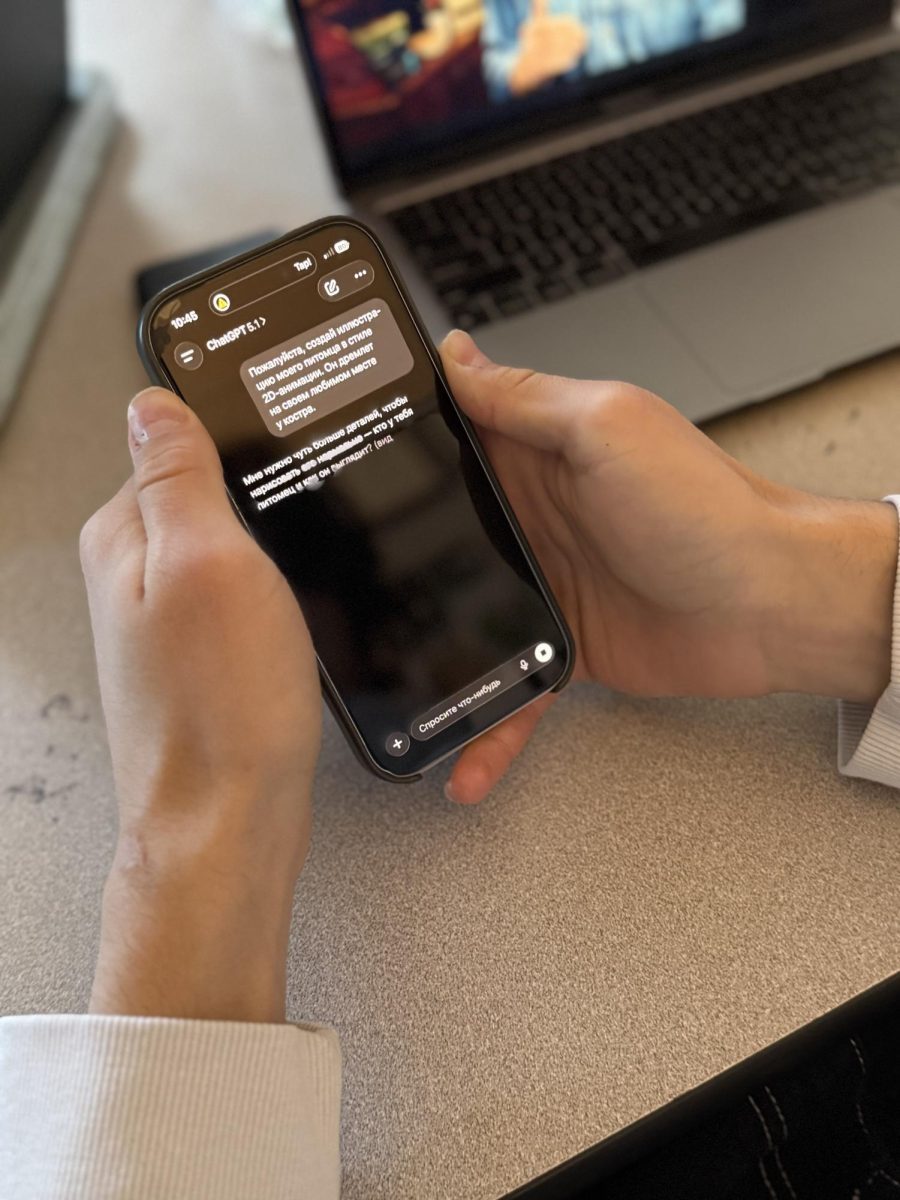
“I use AI a lot, sometimes for school assignments,” sophomore Charley Weaver (10) said. “I still put in effort in my schoolwork and do my work; I mostly use it to help me understand the assignment. Sometimes, if I’m short on time, I’ll use AI to do busy work that is worth low points.”
The ease with which AI produces quality output, whether it’s an essay, lab report or math answer, risks creating a habit in students of accepting AI-generated information without examination. When students consistently accept AI’s output without questioning its logic, checking for accuracy or identifying its biases, they fail to develop the intellectual skepticism needed for both academic and everyday life.
“I use AI on almost everything, to be honest,” Lena Carver* (11) said. “I just don’t have time to do work sometimes or have more important assignments. It genuinely does make it harder to learn but also gives me more time to focus on everything else I have to finish for the day.”
For assignments, students consider “busy work,” the temptation to use AI can be irresistible. This behavior prevents them from understanding the process of academic work. Structuring an essay or outlining a concept isn’t just another task to finish; it’s a way to build core skills in organization, logic and self-expression.
By handing those steps to AI, students miss the opportunity to strengthen the skills needed for complex, original thinking. That gap will affect their success in college and professional careers.
College and beyond
These habits formed in high school only worsen in higher education. Colleges expect incoming students to have already mastered critical thinking, research and independent writing skills, the very abilities many are now outsourcing to AI. The decline in these skills forces universities to rethink coursework, designing “AI-proof” assessments that test genuine comprehension while maintaining academic integrity.
If schools fail to address this issue, the decline in preparation and rise in academic dishonesty could erode the value of university degrees. The core of intellectual struggle in higher learning risks being replaced by automated output.
A changing job market
AI’s impact doesn’t stop at education. Entry-level jobs, positions that once launched careers, are also disappearing. Many of these roles, such as administrative assistants, data clerks and fundamental analysts, involve repetitive tasks that AI can easily automate. Without them, young workers may miss crucial opportunities for mentorship and hands-on experience, which can limit their career advancement.
This shift isn’t just changing job titles; it’s creating economic instability. By 2030, about 30% of current U.S. jobs could be fully automated, while 60% will face significant changes due to AI integration, according to the National University. The data shows how urgently workers must adapt by learning new skills and becoming technologically fluent.
As companies invest in AI systems that don’t require salaries, benefits or breaks, profits rise but at a cost. The concentration of wealth and productivity among businesses may leave countless workers without income or opportunities to compete.
The AI wave represents a major technological leap forward, but also brings serious risks that can’t be ignored. AI’s benefits should not come at the cost of human capability or economic fairness. Safeguards and ethical guidelines must be implemented to mitigate the consequences before they become irreversible.