
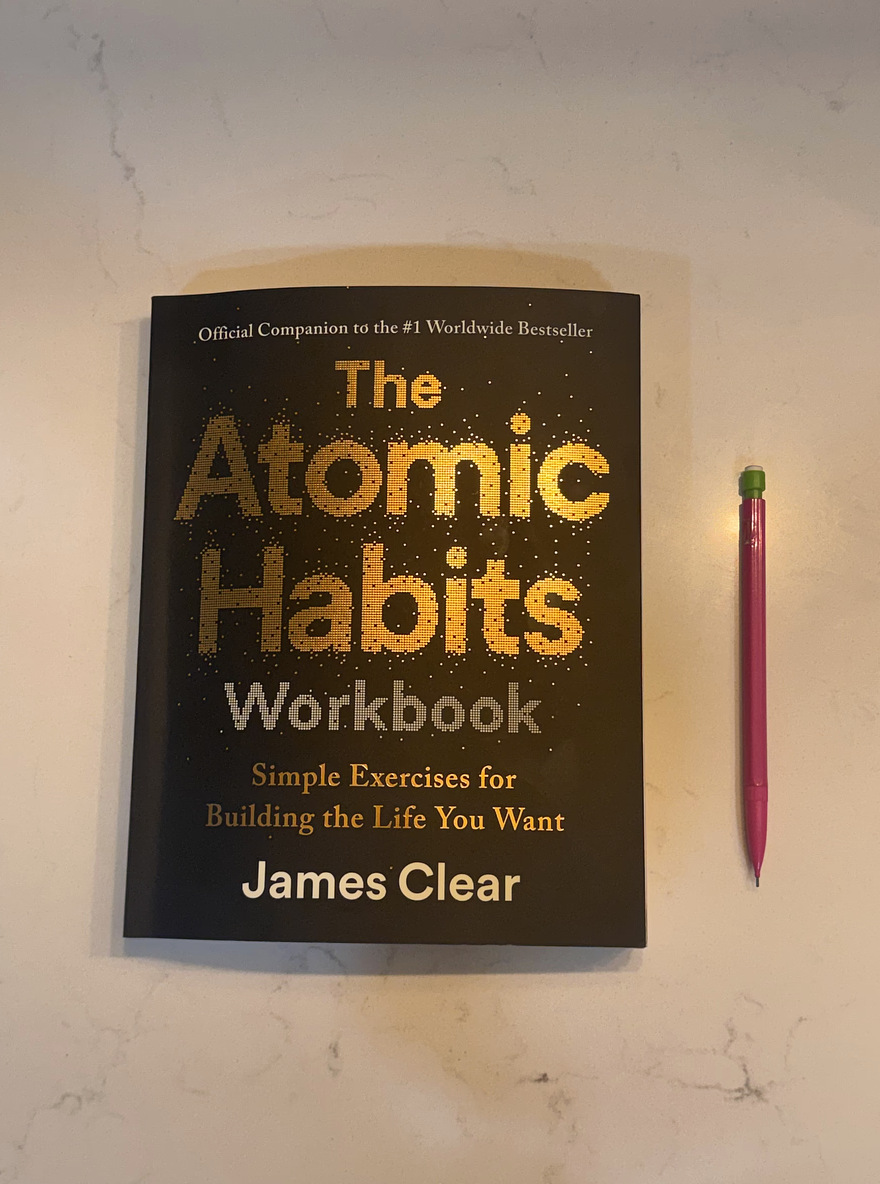
Every New Year begins the same way. People promise to work out more, eat better, study harder or finally break bad habits. By February, most of those resolutions are gone. The difference between people who succeed and those who do not is rarely motivation. It is systems. This guide is inspired by Atomic Habits by James Clear and focuses on building habits that actually last.
How to Build New Habits
Step 1: Focus on Identity, Not Just Goals
Most resolutions fail because they focus only on outcomes. Saying, “I want to get good grades” is different from saying, “I am the kind of person who studies consistently.” Clear argues that real change happens when habits support the person you want to become. Decide the type of person you want to be. Prove it to yourself with small wins. Each small action reinforces identity and builds confidence over time. This was one of the biggest realizations for me when it comes to building habits. In order to begin building new habits you must first become aware of who and what you identify with and if it doesn’t align, change that.
Step 2: Starting Small and Realistic Goals
People often set goals that are too ambitious at the start. Clear explains that habits should be easy enough to do even on low-motivation days. Studying for five minutes or doing a short workout lowers resistance and increases consistency. Small habits compound over time into noticeable results. Instead, claiming to work out every day as your resolutions setting the goal to 3 days a week may be more reasonable.
Step 3: Make Habits Obvious and Easy
This step is where the action begins. Clear states, “Just start. Start slow if you have to, start small if you have to, start privately if you have to, just start.” Someone’s environment plays a major role in behavior. Clear emphasizes that people are more likely to do what is convenient. When you get home from school, the couch is the most tempting to lay down and take a nap, but if you quickly design your environment to support good habits, it makes success more likely. Leaving study materials around or removing distractions reduces the likeliness to fall back into old habits and creates reliance on willpower and encourages consistency.
Step 4: Make Habits Rewarding
The brain repeats behaviors that feel satisfying. Clear highlights the importance of immediate rewards, especially when working toward long-term goals. Tracking progress or pairing habits with enjoyable activities helps reinforce behavior and makes habits more likely to stick. The Atomic Habits workbook is an interactive habit builder and tracker.
Step 5: Build Consistency, Not Perfection
Missing one day does not ruin progress. What matters is returning to the habit. Clear’s “never miss twice” rule encourages persistence rather than guilt. Habits are built through repetition, not perfection, and progress comes from showing up consistently.
New habits do not require a new year. They require better systems. By focusing on identity, starting small and shaping your environment, lasting change becomes achievable. Resolutions fade, but habits define who you become.
How to Create a Good Habit
Clear explains that habits follow four laws. The first law (cue) is to make it obvious. The second law (craving) is to make it attractive. The third law (response) is to make it easy. The fourth law (reward) is to make it satisfying. When these steps are followed in order, good habits become easier to start and easier to maintain.
How to Break a Bad Habit
Bad habits follow the same pattern and can be broken by inverting the four laws. The inversion of the first law (cue) is to make it invisible. The inversion of the second law (craving) is to make it unattractive. The inversion of the third law (response) is to make it difficult. The inversion of the fourth law (reward) is to make it unsatisfying.
New habits do not require a new year; they require better systems. By focusing on identity, starting small and shaping your environment, lasting change becomes achievable. Resolutions fade, but habits define who you become.
Sources: Clear, James. Atomic Habits: An Easy & Proven Way to Build Good Habits & Break Bad Ones. Avery, 2018.