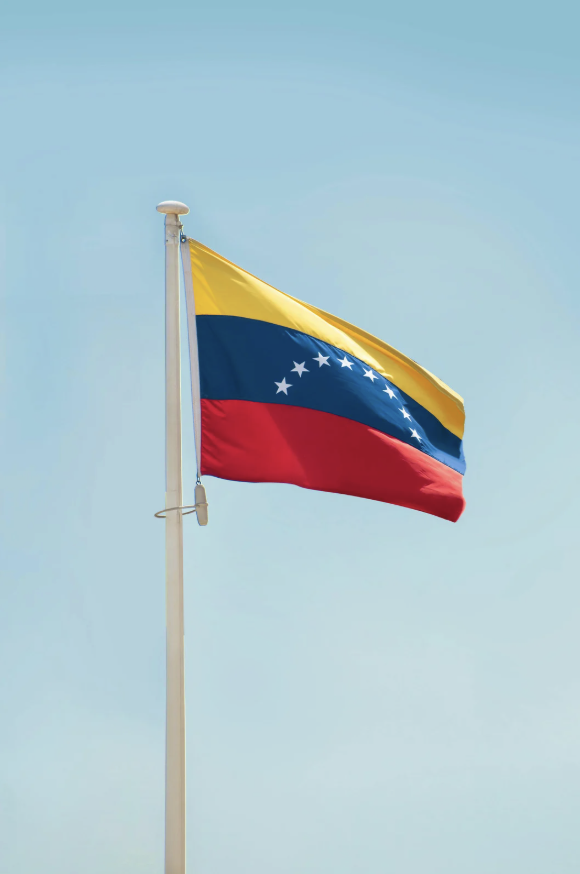
Venezuelan president Nicolas Maduro and his wife, Cilia Flores, were captured by the United States in a surprise attack on Caracas, Venezuela. He was then transported to the United States, where he faces charges of conspiracy in the United Stated District Court for the Southern District of New York and has pleaded not guilty. Prosecutors of the case claim that Maduro, his wife and son partnered with terrorist groups in a cocaine-trafficking conspiracy. Delcy Rodriguez, Maduro’s former vice-president, now serves as interim president.
Before Maduro’s capture, Trump called the Venezuelan president, encouraging him to “surrender.” A CIA team had been surveilling Maduro, and there was an armada of U.S. warships off the coast of Venezuela. Still, Maduro refused and was captured at 10:46 p.m. ET on Friday, Jan. 3, according to NBCnews.com.
The operation followed months of secret planning, beginning with an escalation of military conflict in Venezuela under “Operation Southern Spear.” First, Trump signed an executive order allowing drug cartels to be named “foreign terrorist organizations” on Jan. 20, 2025, one of which was Tren de Aragua, a street gang that Trump claims Maduro’s administration was “orchestrating drug trafficking and illegal immigration into the U.S.,” according to PBS.org.
Then began the Trump administration’s attacks on alleged drug boats, with the first strike occurring on Sept. 2. Before Maduro’s capture, there were 35 known strikes and at least 115 confirmed deaths from the strikes. The legality of the strikes is debated.
Since Maduro’s removal from power, the U.S. has taken control of Venezuela’s oil supply, planning to seize and sell 30-50 million barrels of oil with the intention of gaining “leverage,” according to Secretary of State Marco Rubio, from TIME.com. The U.S. has also seized two tankers carrying Venezuelan crude oil, one tanker being Russian and the other stateless. The administration has stated that the $1.8-3 billion from the sale of oil will help support Venezuela during restructuring.
Venezuela now has armed militias, called colectivos, that patrol streets, search cars, check phones and run checkpoints after the U.S. attack. According to The Guardian, Venezuelan residents who were suspected of supporting the attack could be arrested, and the citizens live in fear of the colectivos.
Trump did not seek congressional approval for military action in Venezuela, following a trend of increasing power for the president and dwindling power for Congress in military actions—Congress has not officially declared war since World War II, despite multiple military conflicts. Congress does have oversight, including the ability to deny a budget for future proceedings in Venezuela.
Some Republicans have joined Democrats in voting to advance a Senate resolution limiting future use of military power without congressional approval in Venezuela. Tension about the limits and legality of the U.S. military action in South America has been building since the boat strikes carried out in Operation Southern Spear, according to CNN.com.
Trump said in an interview that the U.S. will control Venezuela for “much longer” than a year, using the sale of Venezuelan oil to support the country. Trump has stated that Venezuela is not the only South American country that the U.S. might act against, saying “we will be talking about Cuba,” “something will have to be done about Mexico,” and warning Colombia.
The future of these conflicts is uncertain, especially amid congressional turmoil. While life is returning to normal in Venezuela following the strike, it remains to be seen how the U.S. presence will shape Venezuela.