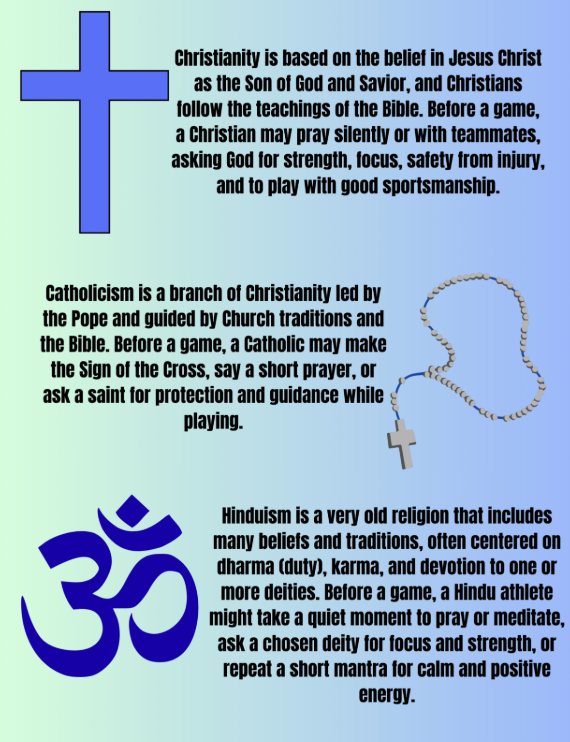
At Plant High School, athletics are more than just competition, they are also a space where many student-athletes connect their personal beliefs with performance, mindset and team culture. While religion is not always openly discussed, it quietly influences how athletes prepare, respond to pressure and find purpose in their sports. From brief prayers before games to wearing meaningful symbols or leaning faith during tough moments, religion remains a personal yet powerful presence across Plant’s athletic programs.
Through students’ perspectives, the focus on how religion helps players manage pressure, build confidence, stay grounded and create balance between demanding schedules and personal beliefs is shown. While participation in faith-based practices is always a personal choice, these stories show how religion continues to shape the mental and emotional side of competition for many Plant athletes.
Baseball:
Religion has been a part of baseball for a long time, even if it is not always discussed. In many cases, players will make small gestures before going onto the field, such as making a cross in the dirt, praying quietly or pointing upward after a big play.
“I am a Christian, and my religion affects my play by taking away the pressure that I put on myself,” said Jordan Olivia (11). “My religion helps me to play better because I play more loosely. I balance my religion and my sports schedule by spreading it to the people around me and bringing the energy to the field.”
Baseball is known as being a mental game, with high-pressure moments. For many players, religion is not about gaining an advantage but about staying calm and focused. Olivia explained how his faith helps him to stay grounded during games and not get too overwhelmed by mistakes.
Religion in baseball remains a personal choice. However, faith is still one aspect of the culture that reflects the different experiences of athletes on the field, whether they choose to pray before a game or not.
Softball:
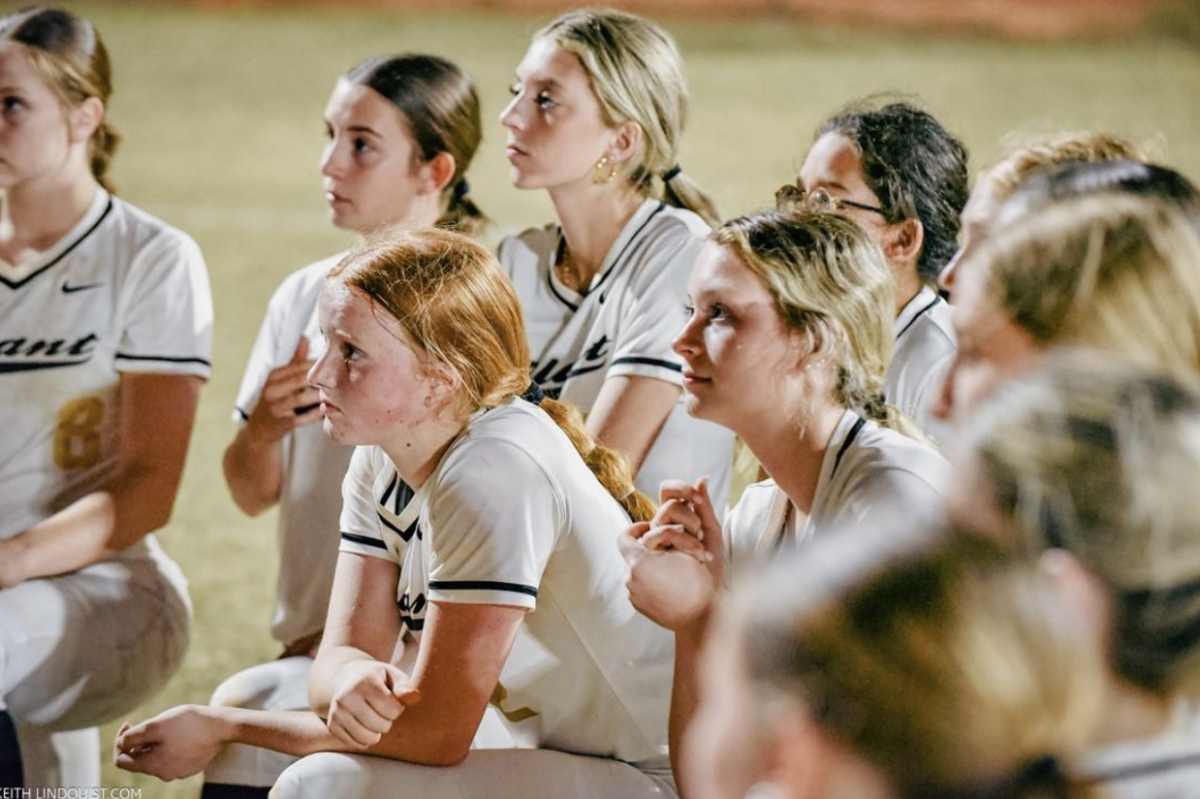
Religion also plays a role in softball, especially in bonding. Many players choose to express their beliefs in simple ways, such as wearing certain jewelry, praying before a game or bringing teammates closer together. These moments are usually player-led, not coach-led, and participation is a choice.
“I normally wear my cross necklace during games and practice, which makes me feel more grounded,” said Isabella Iarossi (11). “I feel like being closer to God allows me to play better because I believe I am always stronger with God, and being religious definitely helps me feel more supported and like I can accomplish more.”
Softball has strong connections to community programs, especially at the high school level. Many girls were introduced to local leagues when they were younger, some of which are connected to nearby churches or community groups. These programs focus on respect, discipline and teamwork. While softball continues to grow into a competitive sport, the lessons learned in small groups carry over to the field.
Not every softball player is religious, and many teams include athletes of diverse backgrounds, specifically Plant. This diversity helps teams learn to respect and value others’ beliefs and to focus on the shared love for the game.
Balancing the schedule of religion and softball can also be a challenge. Some players may rely on praying before a game or coming into a small group for support. This can make it essential for players and coaches to be mindful of respect and inclusion. Finding the balance allows softball teams to focus on performance while still respecting everyone’s individual beliefs.
“Luckily, we only have practice on the weekdays, so on Sundays I can still go to mass, and I am always able to pray whenever I can,” Iarossi said.
Despite facing the challenges of balancing athletics and faith, most students find ways to work both into their lives. For students like Iarossi, faith fits into the schedule without interfering with practices and games. Experiences like these represent that while both faith and sports require balance, many students can manage both with time management.
Basketball:
The girl’s and boy’s basketball seasons started on Nov. 18th, and both teams have been relatively successful so far. The girl’s team stands with a record of 7-7, and the boy’s team with 14-4. Some players shared that they credit their accomplishments to aspects of their personal religion and claim it has influenced their path in sports.
An example of this is Max Faulk (10), a team athlete who identifies as a Christian.
“I am a Christian, and I usually pray before most basketball games to ask for safety and good luck,” Faulk said. “I believe my religion helps me play better because God can create miracles for me. Every time I pray, I feel like good things happen, and I feel more confident and at peace knowing I am supporting my faith.”
Praying is a method to help not just players, but anyone feel more connected to their individual religion. It is also convenient due to its quick nature on a field or a huddle on the court. It doesn’t need to be a set amount of time, making it easy to turn to God for any reason, such as motivation or consolation. Faulk expanded on how God can help him get through those periods of unhappiness through prayer as well.
“Basketball helps me feel closer to God because it gives me something to pray for and hope toward,” Faulk said. “However, I feel closest to God when I am feeling down or sad, because I trust that He has a plan for me and that everything happens for a reason.”
A player on the girl’s basketball team, Kacey Cheesman (10), also commented on how prayer and mindset affect performance in her sport.
“My Christian faith shapes my mindset as an athlete. Before games, I pray to center my thoughts and focus my mind,” Cheeseman said. “This helps reduce anxiety and stress because I trust that I am using the abilities God has given me. Instead of worrying about results, my faith reminds me to focus on effort, preparation, and attitude.”
By grounding herself in faith, Cheesman has found a healthier way to respond to challenges during games. Rather than letting mistakes define her performance, she relies on her beliefs to regain composure and maintain confidence, even when the pressure is high.
“This mindset helps me handle pressure and mistakes more effectively. When something goes wrong, I do not dwell on it; I reset quickly and focus on the next play,” Cheeseman said. “Knowing that my worth is not defined by performance allows me to stay calm and confident in high-pressure moments.”
Cheesman, as well as other players, feels that playing one of their sports can strengthen their religious beliefs. It gives them motivation to invest time in individual worship because they gain confidence and guidance not only in the game but also in their personal lives.
“I feel closest to God during quiet moments of prayer and when I am playing basketball,” Cheesman said. “Being on the court helps me stay present, grateful, and mentally strong. My faith reinforces the belief that I can do hard things with focus and perseverance. Even with a busy schedule, I keep my mindset grounded through reflection, allowing my faith to guide how I think, respond, and compete.”
Finally, Tripp Brown (12), a Catholic player, reflected on his experiences with religion.
“I play both football and basketball, and prayer before every game helps me stay focused and hopeful,” Brown said. “Religion plays an important role in improving performance by encouraging effort and helping maximize potential. Faith provides motivation and confidence during competition. The strongest connection God I experience is felt at church.”
This sentiment is common among many religious students, as church often serves as a space for reflection, community, and spiritual renewal. Regular worship allows athletes to step away from the pressures of competition and reconnect with their faith in a more personal and structured setting.
“Attending church on Sundays is manageable since there are usually few other commitments, making it easy to stay consistent with faith,” Brown said.
Plant Football
The Plant Football team went 5-6 this year. Losing many seniors last year was a hard loss, but the team pushed through it and worked diligently this year. Although football is a very aggressive sport, these athletes have been able to use this in a way to become closer to the Lord.
Firstly, August Voss (10) plays varsity football for the Panthers wearing #58. When asked about his religion and how it affects his sports life, Voss shared how his Christian faith strongly influences both his life and his experience in sports.
“Christianity gives me something to play for in a way, and it helps me stay focused on my goals,” Voss said. “It takes away the thought of only playing for myself and helps me play for the Lord.”
Voss feels closest to God when he goes to church and when he spends time in scripture.
“I feel closest to God when I go to Church or when I get in the Word and learn more about Him,” Voss said.
Next, Gavyn Smith (12) played varsity football for the Panthers this past wearing #13. Smith shared how his Christian faith plays a major role in shaping both his life and the way he approaches football.
“I’m a Christian, and it affects me on the football field because I play knowing that I’m a soldier of God,” Smith said.
Christianity gives him purpose and motivation every time he competes. Smith believes that God directly impacts his performance.
“I believe Jesus is the reason I play better because He leads me a pathway and in times of stress I can go to Him,” Smith said.
When the pressure is high, he relies on prayer and faith to remain calm and focused.
Playing football also strengthens his relationship with God because, “in everything I do, I do it for the glory of God,” Smith said.
He also believes that balancing football and his relationship with God is important, “I’m always praying to God and asking Him for guidance,” Smith said.