
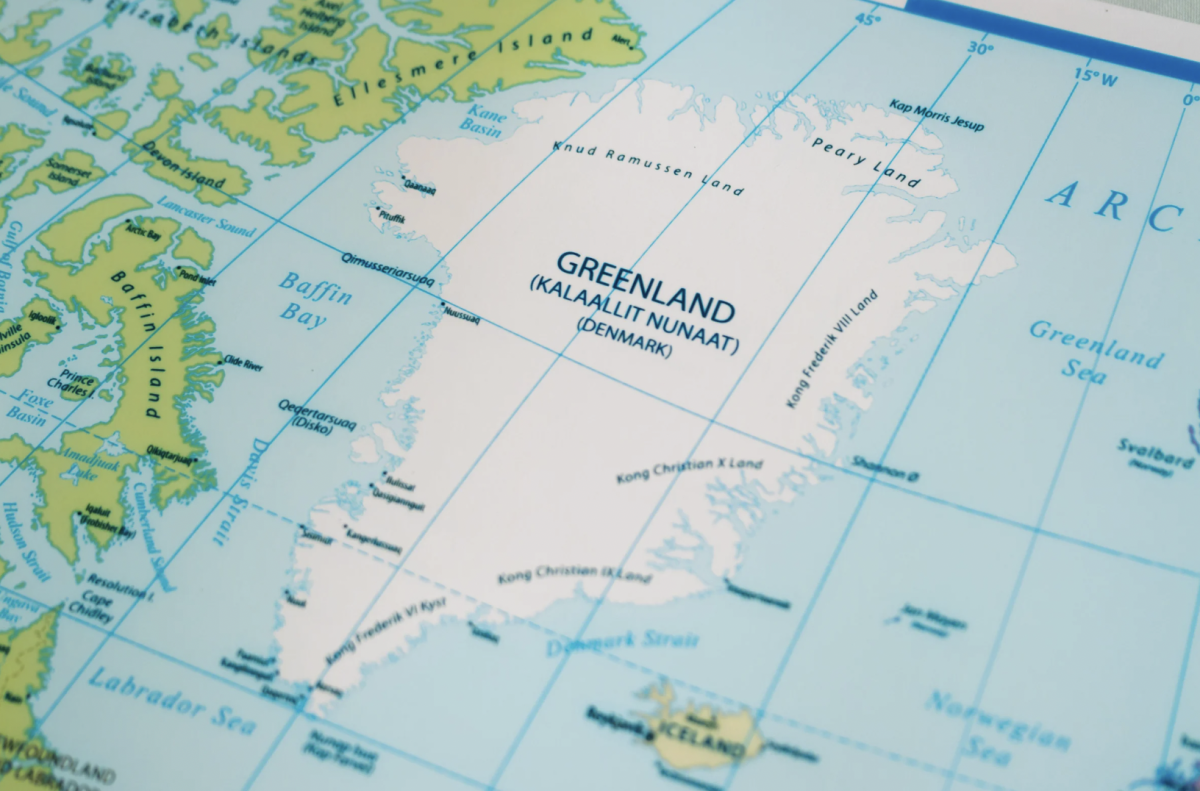
The U.S. annexation of Greenland has been a continual theme of the Trump Administration, most recently coming to a head in January of 2026, when Trump began discussing options for U.S. control of Greenland, a semi-autonomous territory within the Kingdom of Denmark.
NATO Conflicts
Greenland and the U.S. are both members of NATO, the North Atlantic Treaty Organization, a political and military alliance that aims to ensure the collective security of all member countries. Article Five of the Washington Treaty, the founding document of NATO, outlines an idea central to NATO—that an armed attack against one shall be considered an attack against [all member countries,]” according to the House of Commons Library. A military attack between NATO nations is unprecedented and would cause an impasse, as all member nations must vote unanimously to invoke Article 5.
Tariffs
Trump threatened to impose a 10% tariff on multiple European countries starting Feb. 1 until a U.S. purchase of Greenland is allowed, according to theguardian.com. He stated that the tariffs would increase to 25% on June 1. This action led to a meeting of representatives of European countries, where French President Emmanuel Macron asked the EU to use its “Anti-Coersion Instrument,” which would limit U.S. economic activity with the EU. Retaliatory tariffs could be another way to impose limits on the U.S.
During the 2026 Davos Conference, Trump stated that he had reached a “long-term deal” that “puts everybody in a really good position…” Trump did not comment on whether Greenland will remain under the control of Denmark. On Truth Social, Trump said, “I will not be imposing the Tariffs that were scheduled to go into effect on Feb. 1st,” due to this deal.
Why Greenland?
Around 80% of Greenland is covered in ice, and it is only sparsely populated with around 57,000 people. According to CBSNews.com, Greenland is one of the most favorable locations to send a missile from the U.S. to Moscow. Trump has stated that the acquisition of the island is crucial for national security, specifically against China and Russia. In addition, access to Greenland’s natural resources—oil, gas, rare-earth metals, and minerals—is increasing due to climate change. Access to Greenland also means shorter trade routes for North America.
U.S. Opinions
For the most part, Trump’s quest for Greenland is unpopular in the U.S. A Reuters-Ipsos poll found that 47% of Americans disapprove of the U.S. acquisition of Greenland, while 17% approve. Similarly, 4% of Americans think that the U.S. use of military force to take possession of Greenland would be a good idea, while 71% state that it would be a bad idea. Americans are also worried about the effects this conflict would have on international relations, and 84% say the U.S. should follow international law in its foreign policy.
The Future
Trump has not expanded on his statement that a deal has been reached for Greenland. Denmark and Greenland’s leaders have stated that the island’s sovereignty is “non-negotiable.” It remains to be seen how Trump’s deal and increasing geopolitical tensions will affect Greenland’s sovereignty and autonomy.