
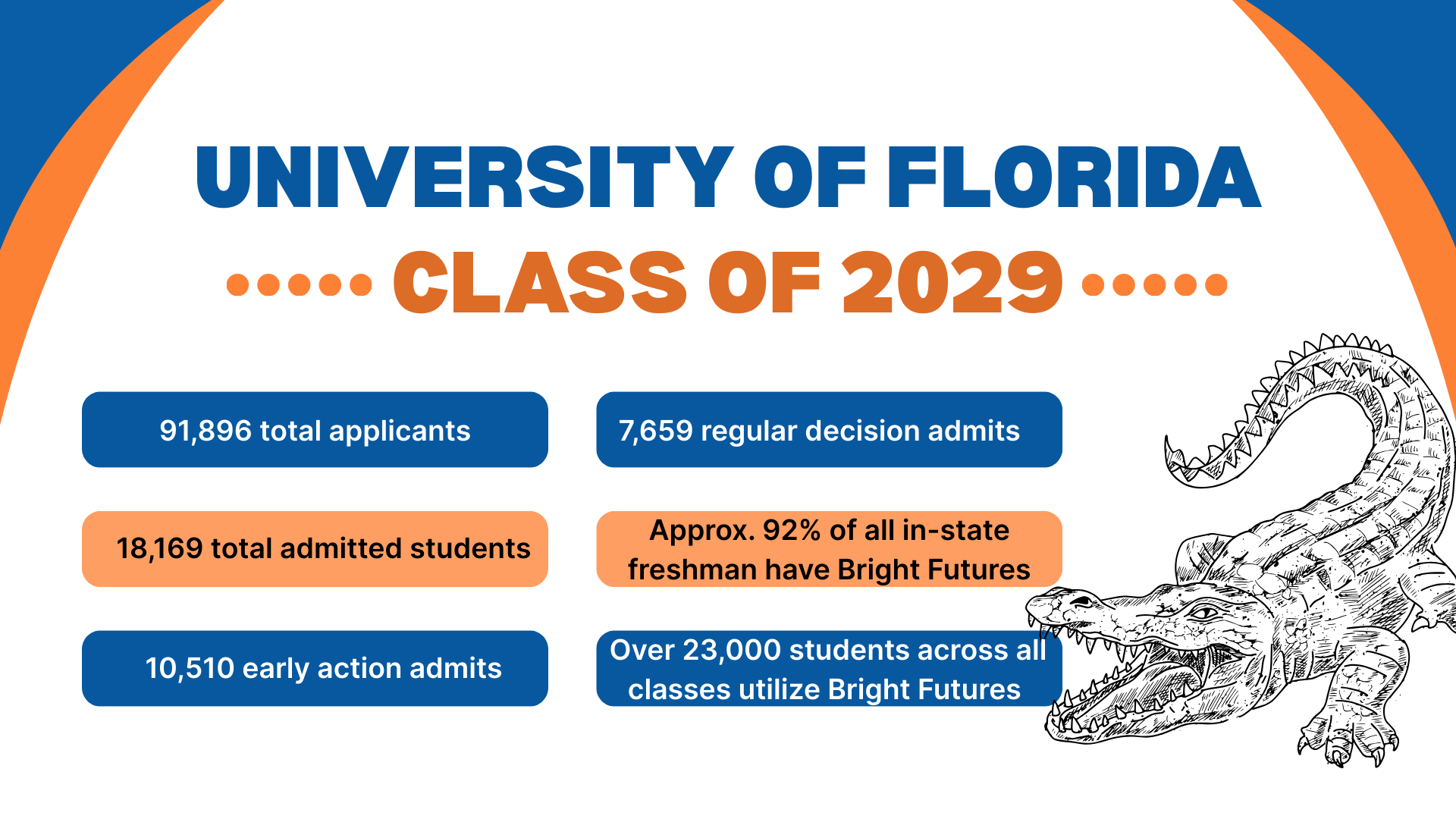
In fall 2024, the University of Florida made a major change to its admissions process for incoming first-year students by adopting an Early Action admissions policy. The policy gives students who submit applications by Nov. 1 an admissions decision by the end of January, about two months earlier than students who apply under regular decision. For many students, the earlier timeline helps reduce uncertainty during an already stressful admissions process.
In the first Early Action cycle, UF admitted more than 10,000 students, reflecting the university’s competitive standing and strong demand. The new policy has also raised questions about who benefits most, particularly regarding state residency and admissions laws.
Aubree Mann, a senior, says applying early was stressful but ultimately worthwhile.
“I think applying early was stressful, having to get it done so early, but it’s worth it to get an earlier decision, so overall less stressful,” Mann says.
At UF, as at most public universities, a student’s Florida residency status does not affect admissions decisions and applies only to tuition classification. According to UF policy, residency determines whether a student pays in-state or out-of-state tuition based on legal domicile requirements established by the state of Florida. To qualify as an in-state resident, the student or supporting family member must have established residency at least 12 months before enrollment.
Despite common misconceptions online, the university has stated that residency is not considered during admissions review. UF evaluates applicants based on their academic performance and extracurricular involvement. Residency status affects costs and scholarships, not acceptance decisions. Out-of-state students typically make up about 12% to 15% of the student body.
Florida’s public university system is guided by regulations that maintain a balance between resident and nonresident students. Systemwide policies place a cap on the total number of out-of-state students across the state’s 12 public universities.
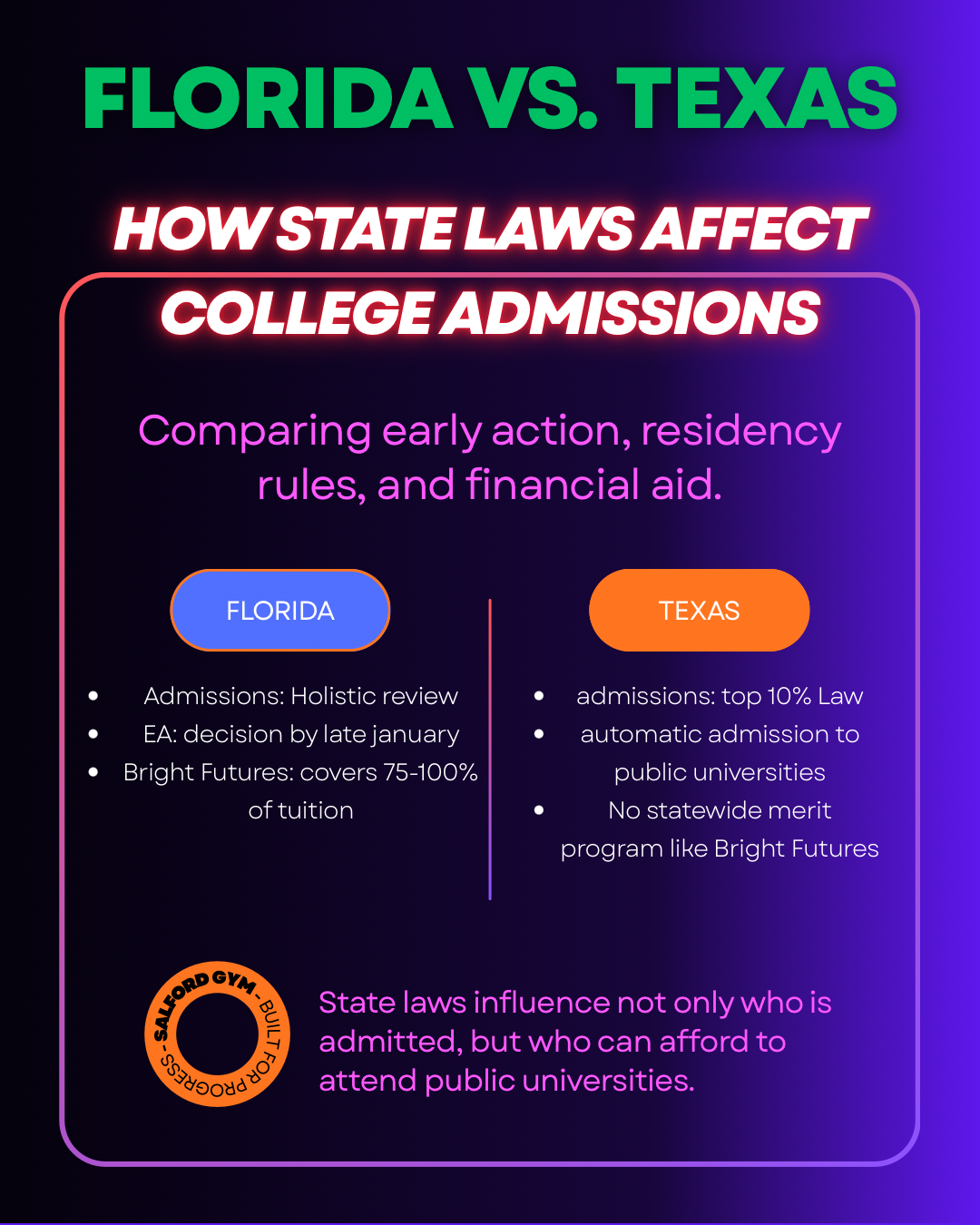
How Texas Does It: The Top 10% Law
Texas uses a different approach to public university admissions. Texas House Bill 588, commonly known as the Top 10% Law, guarantees admission to any public university in the state for students who graduate in the top 10% of their high school class.
While the policy has been modified over time, including limits on how many students the University of Texas at Austin admits under the law, the core idea remains. High-achieving Texas students are guaranteed access to public institutions in their home state.
The law was designed to increase geographic and socioeconomic diversity and served as a race-neutral alternative after court rulings in the 1990s restricted affirmative action policies.
Florida does not admit students based on class rank or class-specific guarantees. Instead, state laws focus on residency for tuition purposes and systemwide enrollment limits. While Florida has no automatic admissions policy for in-state students, regulations still influence overall enrollment patterns.
Bright Futures and the In-State Advantage
Another key factor in Florida higher education is the Bright Futures Scholarship Program. The state-funded program awards scholarships based on academic achievement and is available only to Florida residents. For eligible students, Bright Futures can cover a significant portion of tuition, making in-state schools more financially attractive.
Although the program does not influence admissions decisions, it plays a major role in where students choose to enroll after being accepted. Rising tuition costs nationwide make the scholarship especially valuable for Florida families.
“Bright Futures makes it so much more realistic to go to in-state colleges. It definitely helps make decisions by making tuition an afterthought,” Mann says. “I think Bright Futures is a great thing and helps make college more attainable.”
As UF continues to expand admissions options such as Early Action, the relationship between residency, state law, scholarships and institutional policy remains significant. Florida’s approach emphasizes affordability for residents, while Texas’ Top 10% Plan prioritizes guaranteed access for high-performing students.
Both systems reflect different values in public higher education. While Early Action marks the start of the college experience, the effects of state policy and financial support continue long after acceptance letters are sent.