For Donald Moorman, teaching was not always part of the plan. In fact, during his early years, he aspired to be a marine biologist. However, as he grew older, that interest began to change.
“When I was very young, I actually wanted to be a marine biologist,” Moorman said. “Though that interest passed as I got a bit older and working with children seemed increasingly like something that I would want to do.”
Moorman had originally majored in marketing in college but then realized he did not share the same passion for the field as he did for helping students grow as individuals.
That is where his English education came in. In his eyes, the English subject would have allowed him to connect to children the most.
“Due to my interests and who I am as a person, I felt that English education would provide me the best opportunity to have this impact,” Moorman said. “Teaching Debate has been something that paired nicely with my passion.”
Being a high schooler is known to have its ups and downs. But Moorman specifically approaches teaching with a deep awareness of the pressure students face both in and out of the classroom.
When asked about the challenges his students face, Moorman talked about one struggle in particular – friendship.
“Being a teenager going through high school can be a difficult time in everyone’s life,” Moorman said. “There is so much pressure to fit in and find a sense of belonging. Also, trying to make new friends can be difficult and finding good friends even more so.”
Moorman additionally strives to create an environment where students feel supported both personally and academically, recognizing that school is as much about growth as it is about grades. He explains that struggle is a natural part of learning:
“I have many students who may struggle with learning certain things, and they feel that means they are incapable or are not smart,” Moorman said. “But struggle is a normal part of the learning process. Not everyone learns at the same pace.”
As mentioned, Moorman tries to make his students feel supported in the classroom. But instead of fixing the issue immediately, he takes a different approach.
“I feel that it is important that my students know that they matter and they are valued,” he said. “So before tackling the issue, I tell the students that their problems or worries are justified.”
Due to the fact Moorman teaches debate as well, these incidents occur frequently. In Debate class, students are encouraged to express their opinions and challenge ideas.
However, this can inevitably lead to disagreements. So, Moorman explains how he gets students to express these opposing views respectfully.
Debate involves arguing on two sides of the same topic. This means that to debate effectively, the person must understand their opponent’s side just as well as their own. Consequently, the student is less likely to rely on insults or name-calling.
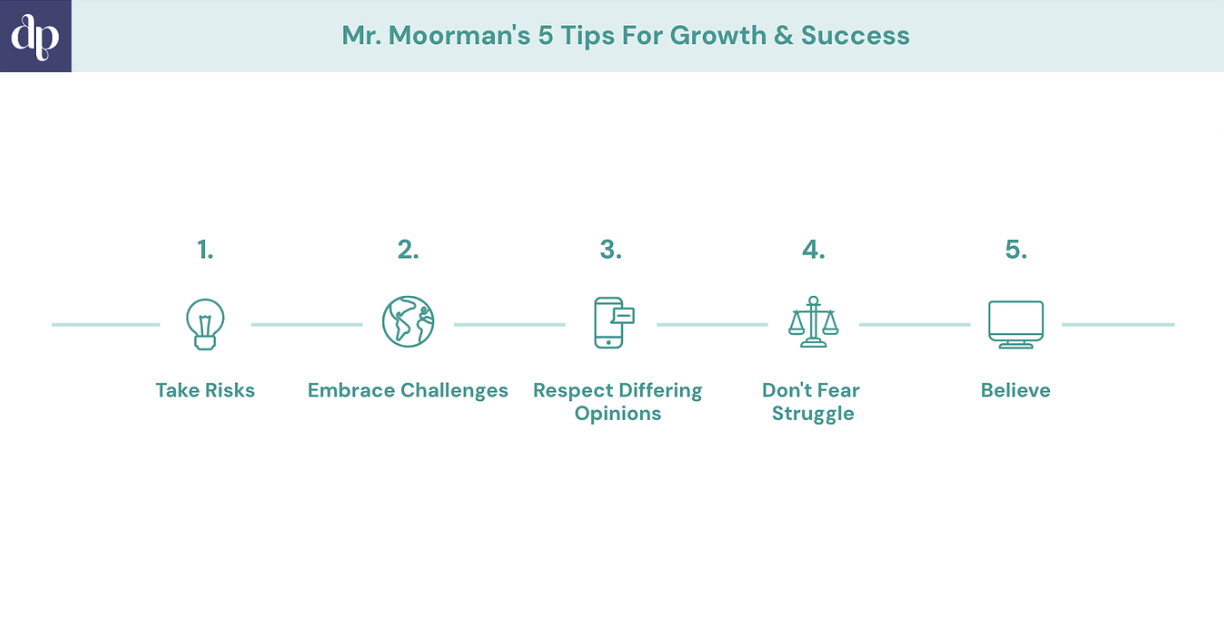
After guiding students in the classroom and teaching them to engage respectfully in debate, Moorman encourages them to apply the same mindset beyond academics. He believes that just as students learn to navigate challenges and disagreements in school, they can grow even more by taking risks and trying new experiences in life.
In the end, Moorman encourages students to take risks and seek out new opportunities, even when it feels uncomfortable. He gives his own life experience:
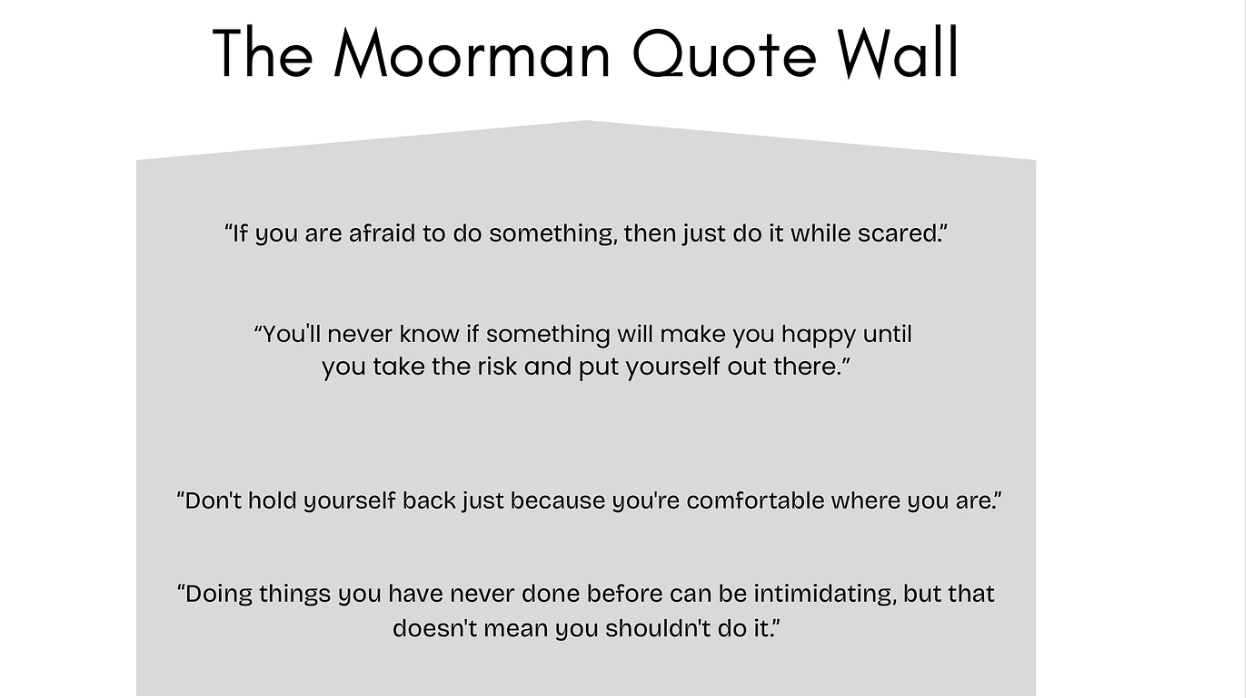
“So many amazing things came from me doing things that I was afraid to do or wanted to avoid. If you are afraid to do something, then just do it while scared.”
Going through an intimidating situation is not a reason to not a reason to avoid it. Or as Moorman puts it best:
“Don’t hold yourself back in life just because you’re comfortable where you are.”