
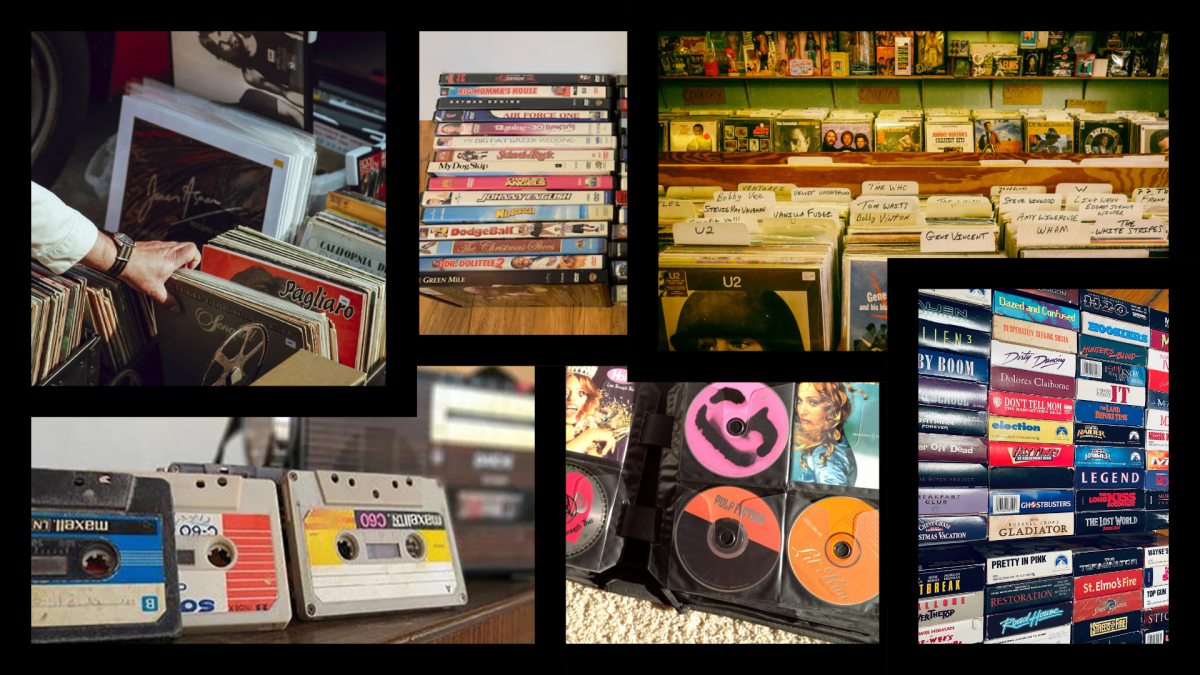
Back before Spotify, YouTube or any sort of internet streaming service, physical media was your only option. CDs or cassettes were used for listening to music, and VHS tapes or DVDs were used for watching movies or TV shows. If you wanted to consume media but didn’t get your hands on the physical copy, you were limited to hoping you’d catch it on TV or hear it on the radio, waiting and hoping your favorite song or show would come on. There was no instant access, no search bar and no algorithm pushing content toward you. You had to be patient, and sometimes you missed out entirely.
Yet, despite how inconvenient it may seem compared to modern technology, the sales of CDs, cassettes and vinyl records have skyrocketed in the last few years. The streaming services that rule music, TV and film have begun to seem unappealing to many select groups of people. People have largely grown tired of not truly owning anything, since everything has become subscription-based and relies on monthly payments. Once that payment stops, access disappears. People have also grown tired of the antics streaming companies pull on a regular basis, like removing favorite TV shows or movies despite fans begging them not to. It creates a sense that nothing is permanent and that the consumer has no real control.
Since physical media costs more and can be harder to track down, especially if you’re looking for something specific, the people behind it get rewarded far more than they would with a streaming app purchase. Buying a CD, a record or a DVD feels more direct. As a result, many people who can afford it choose physical media nowadays.
“If I do spend fifteen dollars to buy the CD, then that’s fifteen dollars that go into the band’s next album, and that’s not what happens with Spotify,” Silas Young (9) says. For many, it feels like their money actually supports the artist instead of getting lost in a large digital system.
Physical media can also be extremely nostalgic. It held a strong presence in the industry for decades, so to be nostalgic for the 90s or early 2000s is often to be nostalgic for movies on DVDs and favorite albums on CD, ready to play at any time. There is something personal about holding the media in your hands, flipping through album booklets or stacking cases on a shelf. Physical media can also play a role in personal style and aesthetics, especially for people inspired by past decades. “CD players are really inconvenient sometimes, but they look cooler than AirPods or normal headphones,” Chloe Jonas (9) says. For some, the look and feel matter just as much as the function.
Physical media also comes in many different formats, covering all types of entertainment. If you want to listen to music, the main formats include vinyl records, cassette tapes and CDs (Compact Disks). For TV shows and movies, DVDs and VHS tapes are the most recognizable physical formats. Each format has its own appeal and fan base, and many collectors enjoy a mix of them.
Beyond the media itself, you also need the equipment to use it. This can be expensive, which limits many people from getting involved in the physical media community. Seth James (9) says, “My dad has a massive VHS collection, but his actual VHS broke a while ago, and they cost like $500, so it just sits in the attic for now.” Situations like this show how access isn’t always simple, even if someone already owns the content.
Despite the costs and inconveniences, many still prefer the ideology behind physical media over subscription streaming services. Streaming requires constant payments, tracking subscription rates, and worrying about where favorite shows are available at any given time. Physical media, on the other hand, is straightforward. You pay a one-time fee and own the product permanently. No one can remove it from your library or lock it behind a paywall later. While streaming services continue to change prices and content libraries, physical media remains consistent. For many people, that reliability, ownership and sense of connection make it worth the effort and cost.