Patriotism is often treated as a controversial word. For some, it represents pride and unity. For others, it feels political or exclusionary. In the United States, where political divisions are increasingly visible, patriotism can seem outdated or even uncomfortable. However, patriotism does not have to mean blind loyalty or ignoring national flaws. At its core, it plays an important role in uniting citizens, shaping civic responsibility and influencing the country’s political climate.
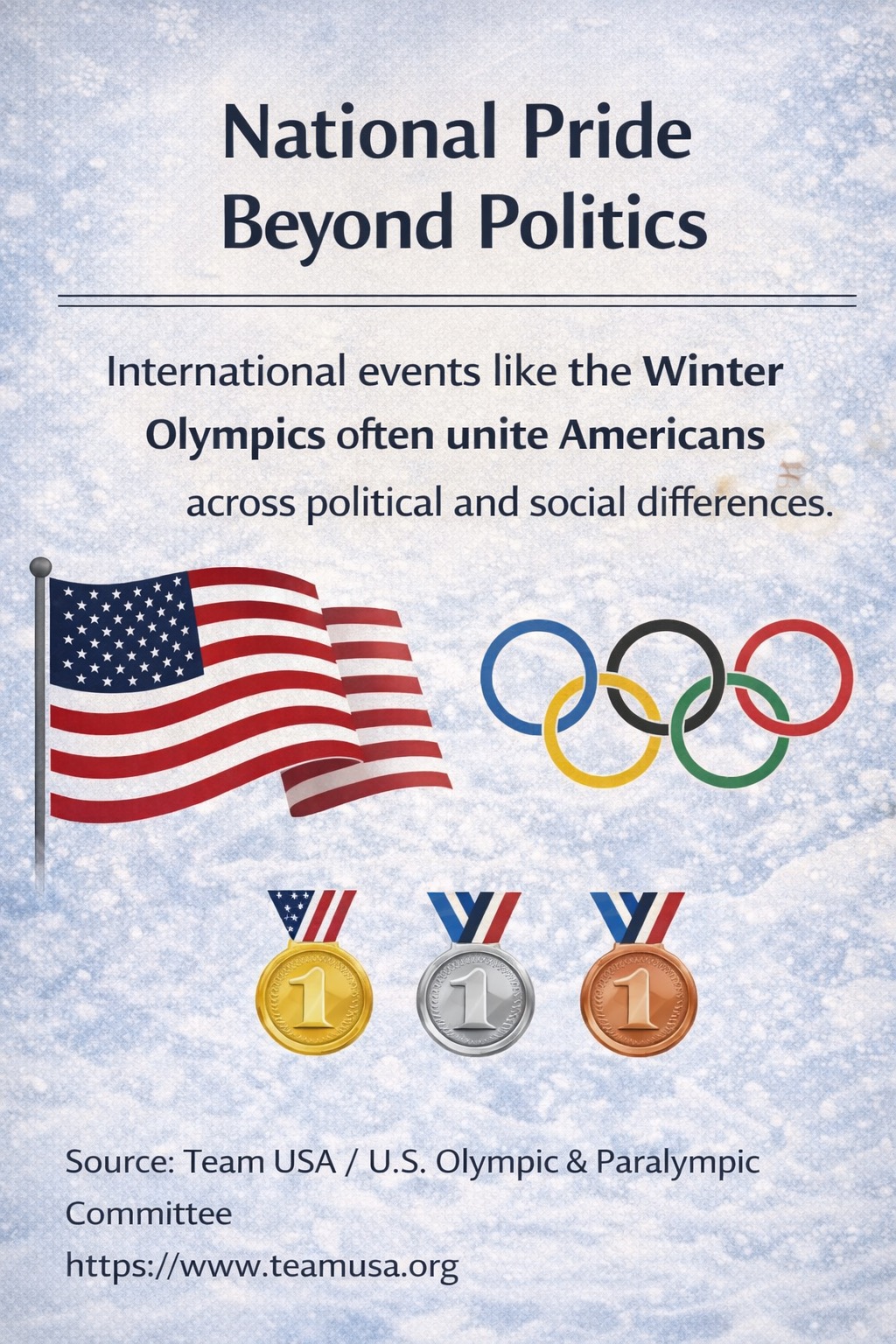
Historically, patriotism has helped Americans find common ground during moments of crisis or achievement. National events, whether tragedies or celebrations, often remind citizens of shared values. One example can be seen in international sports. During recent Winter Olympic Games, American athletes competed under one flag, representing a country made up of people with different backgrounds, beliefs and political views. According to Team USA, international competitions like the Olympics are meant to bring nations together through sportsmanship and collective pride, rather than division (Team USA, n.d.). These moments of unity may be brief, but they demonstrate how patriotism can temporarily overcome political and social differences.
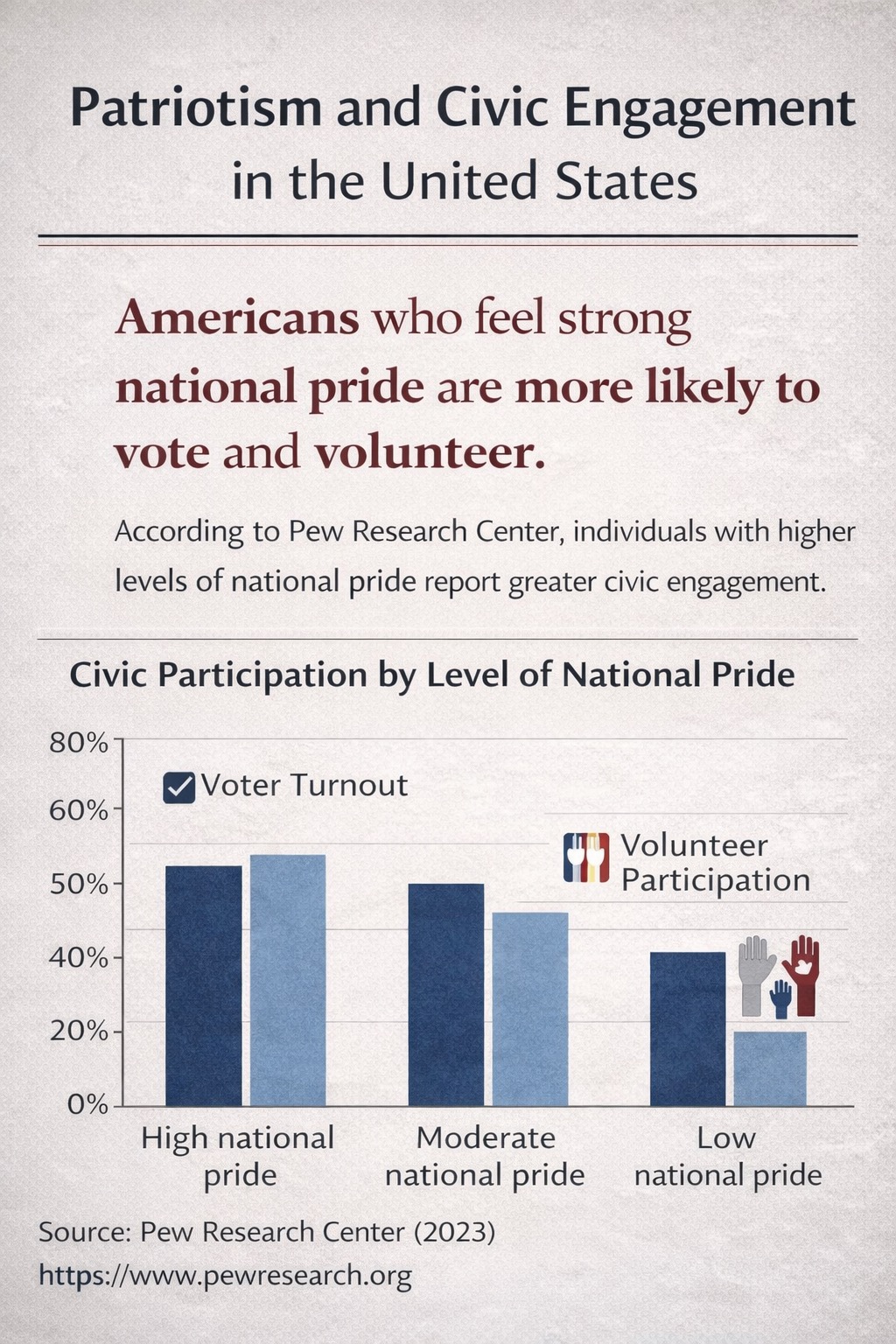
In the U.S., patriotism also influences civic participation. Pew Research Center reports that Americans who feel a strong sense of national pride are more likely to vote, volunteer, and stay informed about public issues (Pew Research Center, 2023). This connection suggests that patriotism can motivate individuals to engage with democracy rather than withdraw from it. When citizens care about the future of their country, they are more likely to hold leaders accountable and participate in shaping public policy.
However, modern patriotism looks different from past generations. Younger Americans often express love for their country through advocacy, protest, and calls for reform rather than traditional symbols. Gallup has found that national pride among Americans has declined over time, especially among younger age groups (Gallup, 2024). This decline does not necessarily indicate apathy. Instead, it reflects a shift in how patriotism is defined. Many students and young adults believe that criticizing the government or addressing inequality is a form of caring about the country, not rejecting it.
“Patriotism is what brings us together and helps us win despite the odds,” Tristan Sears (11) says, “Olympic gold medalist Jack Hughes said it best in his interview, ‘I love the USA…I’m so proud to be an American today.’”
Patriotism also plays a role in shaping the political environment. Political leaders frequently appeal to patriotism to gain public support, framing policies as being “in the national interest.” While this can be effective, it also carries risks. When patriotism is used to divide rather than unite, it can deepen polarization. According to the Brookings Institution, political polarization in the U.S. has increased significantly over the past two decades, often fueled by competing ideas of what it means to be “patriotic” (Brookings Institution, 2022). This makes it even more important to promote an inclusive definition of patriotism—one that allows disagreement while still emphasizing shared democratic values.
Education plays a key role in shaping healthy patriotism. Learning about American history honestly, including both achievements and failures, allows students to develop informed pride rather than uncritical loyalty. The National Constitution Center emphasizes that civic education helps students understand their rights and responsibilities, strengthening democracy over time (National Constitution Center, n.d.). Patriotism grounded in knowledge encourages critical thinking, not silence.
Moments like the Olympics highlight the positive side of patriotism because they are largely nonpartisan. Cheering for athletes does not require agreement on policy or ideology. Instead, it reminds citizens that they share an identity beyond political labels. These moments show that patriotism does not have to erase differences to be meaningful. It simply provides a sense of belonging.
In today’s political climate, patriotism is often misunderstood as either extreme nationalism or complete rejection of the country. In reality, it exists somewhere in between. Patriotism can mean celebrating national achievements, participating in civic life, and striving to improve the country for future generations. It does not require ignoring injustice or refusing to question authority.
Ultimately, patriotism matters because it connects individuals to something larger than themselves. When defined thoughtfully, it can unite citizens, encourage political participation and strengthen democracy. In a divided nation, redefining patriotism as inclusive and active may be one of the most important steps toward a more engaged and unified society.