
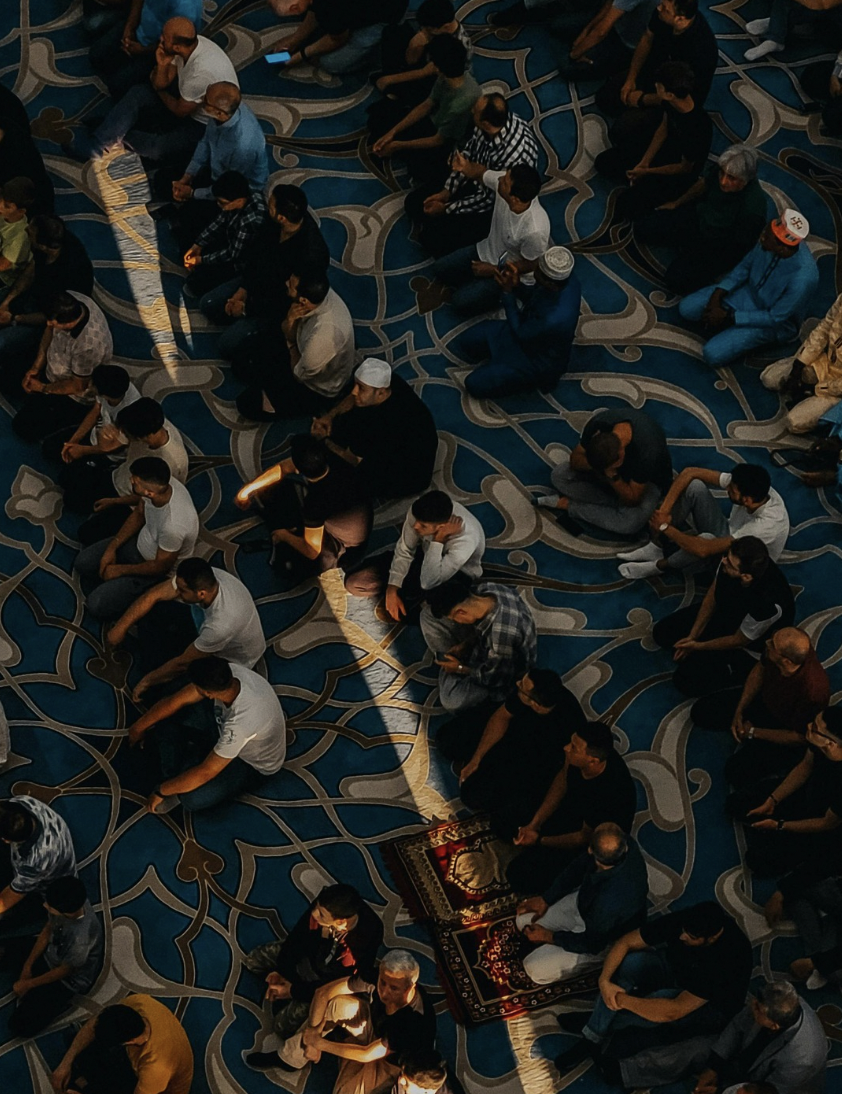
Historically, humans have struggled with things that cannot be fully understood or controlled. The unknowing about death, purpose, suffering and what exists beyond the earth is difficult because there are no clear answers. These uncertainties often create confusion, especially during hard times. In response, many people turn to religion to cope and bring structure to overwhelming experiences.
Religion offers explanations for complex ideas that science or logic can’t always answer. Concepts like the afterlife or a higher power can give a sense of understanding when things seem unfair. In times of loss, religious beliefs help some see death as part of a bigger process. This brings comfort, even if answers are not definite.
Additionally, religion can become a coping mechanism in the feeling of control it can create. When unpredictable events occur, people may feel powerless. Religious practices can offer a way to respond to these situations. Even though these actions don’t have direct outcomes, they can help individuals feel more stable. Believing that something greater is in control can make uncertainty easier to manage.
Furthermore, religion is not the only way people cope with the ungraspable. Some people rely on science or philosophy to find meaning. Others may accept uncertainty without seeking a clear explanation. There is no single method for dealing with the unknown, and people respond differently depending on their experiences and beliefs.
Relying too heavily on religious explanation can discourage critical thinking or prevent people from seeking practical solutions to problems. Some believe that religion and rational thought can exist together. Science focuses on understanding how the world works, and religion often addresses the why of certain things occurring. The events that science can’t explain because of human limitations are explained in religion.
The idea of understanding the ungraspable is finding ways to deal with uncertainty without being controlled by it. Instead of leaving questions unanswered, it provides a narrative to make uncertainty and the unknown more manageable. It doesn’t mean the unknown is fully explained, but it makes it less intimidating to believe there’s something more out there other than humanity.
“The real reason I support God and Christianity is mainly the fact that when I’m living by God’s word, I just feel like such a better person,” said Cabel Clark (10). “I understand that I’m not perfect and I do bad things, but when I read the Bible, I have someone to look up to. That person is Jesus Christ, and he is the only person who walked on earth who did nothing bad, and I really try to look up to him. Believing in Christianity also helps me look forward to the afterlife, understanding that if I have faith in Jesus and I live with him, I get to go to heaven when I pass.”
Furthermore, in modern society, access to information is greater than ever. Some people move away from traditional beliefs, while others maintain or adapt them to fit their current lives. Despite evolving, the basic human need to understand and cope with uncertainty remains the same. People continue to search for ways to handle what can’t fully be known.
Humans can also deal with the unknown through community; religion often provides not only beliefs but also a space where people can connect with others facing uncertainty. Being surrounded by individuals who share similar values can foster connection and a sense of control.
The feeling of belonging can be just as impactful as the beliefs themselves. Community reinforces the idea that uncertainty is a shared human experience rather than an individual burden. Repetitive actions, such as praying, make routine in unpredictable situations.
Additionally, fear of the unknown is a core part of human nature and connects to early survival instincts. When humans couldn’t explain natural events such as disease or storms, uncertainty was signaled as danger. Not knowing what is ahead means there’s a possibility of harm, which triggers the brain’s fear response as a form of protection. Even though society is far more advanced nowadays, the instinct still exists. People may no longer fear the same things as they did earlier on, but uncertainty about the future can create similar anxiety.
The possibility of failure or disappointment can feel more threatening than the risk of being known. So, people may avoid risks not because of incapability but because the unknown feels overwhelming. The fear of the unknown can limit people from exploring new possibilities.
The human mind naturally seeks patterns and explanations. When clear answers aren’t available, people may create assumptions or expect the worst-case scenario. Uncertainty leaves room for imagination, and it typically leads to fear rather than optimism. It’s not just about a lack of information, but about how individuals interpret that lack.
Moreover, people tend to feel more comfortable when they believe they have influence over their circumstances. When situations occur beyond human control, one feels helpless. The inability to predict or manage what happens next contributes to that fear, making it harder to cope with.
The fear of the unknown can encourage people to think ahead and consider consequences. Learning to manage this fear is important. Avoiding the unknown can cause missed opportunities. Growth often requires taking risks without guaranteed outcomes, which means accepting uncertainty.
People develop different strategies to handle these fears. Some seek knowledge and information to reduce uncertainty, while others focus on adapting based on the outcome. Building confidence through past experiences can also make the unknown feel less intimidating. When people realize they have successfully handled uncertain situations before, it becomes easier.