According to the Florida Department of Education, 33,028 students are enrolled in journalism classes, and within their schools, more than 300 programs, such as student publications, online media teams, and broadcast programs, are members of the Florida Scholastic Press Association (FSPA).
FSPA was formed in 1946 with the goal of helping train and educate aspiring young journalists and their advisers. One way this is done is by holding an annual spring conference packed with contests, seminars, and critiques. In addition, students have the opportunity to interact with other schools, draw inspiration, and create connections.
For many students, the experience does not end after just one year. They return with stronger skills, greater confidence and a deeper connection to the journalism community—some even transitioning from participants to leaders. An example of a newfound leader is Janeyliz Baez (12), a student at Pembroke Pines Charter School, who has attended the conference for several years, earned awards and now leads seminars.
“FSPA has shaped me as a journalist by allowing me to step out of my comfort zone, network, and make connections,” Baez said. “Being exposed to different areas of journalism… has sharpened me as a journalist and given me the confidence over the years to truly prove myself in this field.”
“It felt amazing being able to teach a seminar at FSPA this year,” Baez continued. “I wanted to have the opportunity to share my knowledge and advice with other students.”
When asked if she had any words of advice for the up-and-coming underclass excited to attend FSPA, she said, “Don’t be afraid to say yes and don’t be scared to lead. FSPA will give you an incredible opportunity and provide you with the tools to grow and shape yourself as a young aspiring journalist.”
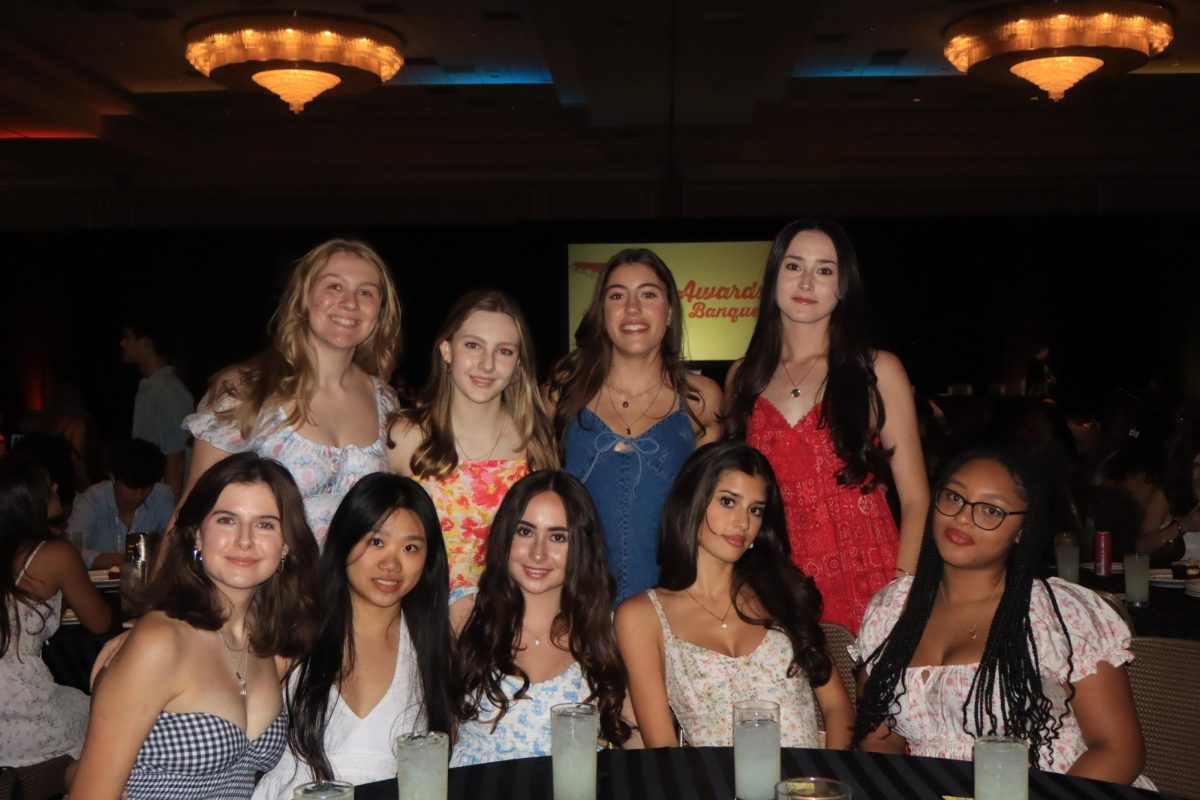
FSPA brings together students from all over Florida, and everyone takes away something different. The conference is about learning, but it is also a chance to celebrate what students and schools have achieved. Hanna Dzubur (11), from Northeast High School, talked about how FSPA made a difference for her.
“My favorite part of FSPA would be the time spent at the dance with my friends—we danced around and had a lot of fun,” Dzubur said. “My friends were pushed into the dance circle, and we just overall had a great time.”
Dzubur continued to talk about the lessons she gathered from her time there. She said, “Something I learned at FSPA this year was from the guest speaker, when she said that our wants must match our work. That was very motivational to me and stuck with me when I went into my classes and did my on-the-spot contests.”
“I would for sure go back to FSPA—the energy this year was unmatched, and I had a lot of fun spending time with my friends. I make a lot of memories every year I go, and I enjoy how all the young journalists get to show off their skills and all grow each year.” Dzubur continued.
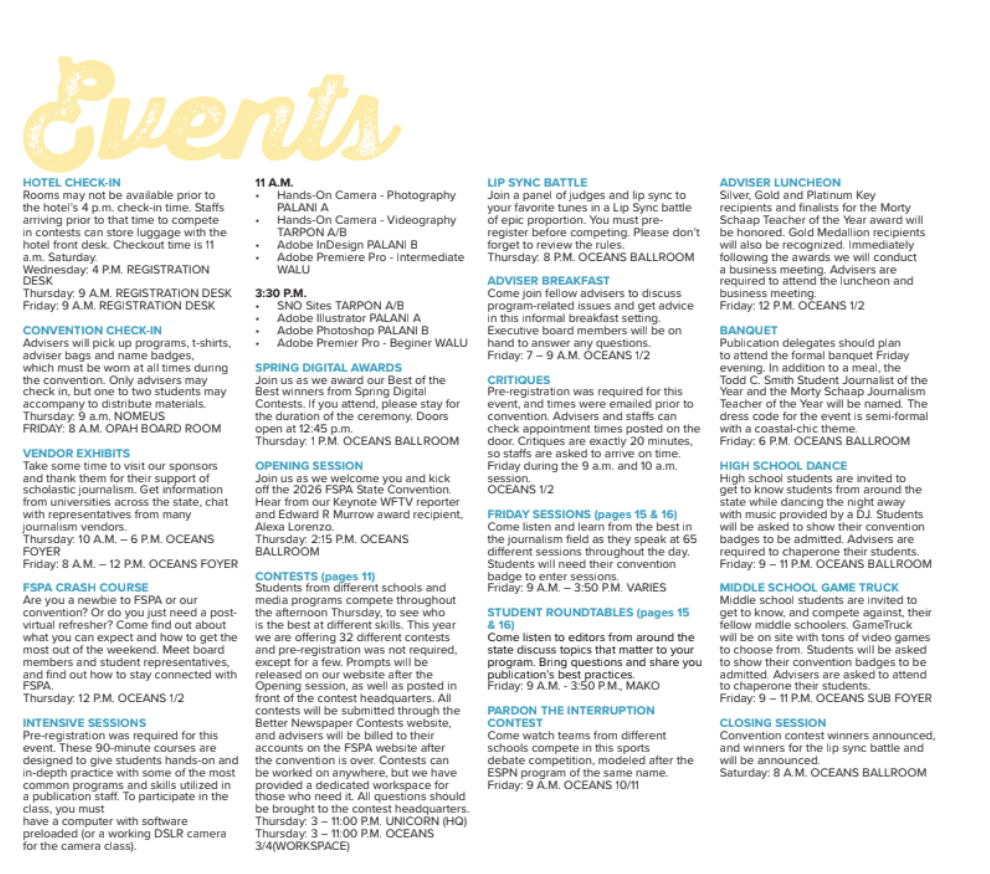
A big part of FSPA is the on-site contests that happen on the first day. Students get a prompt and just a few hours to come up with something that will be judged on impact, originality and quality. There are lots of categories, like writing, yearbook design, audio, and video, so everyone can find something that fits them. These contests really challenge students to do their best, even when the clock is ticking. Molly Siegel (11) shared her experience with the yearbook coverage challenge.
“I competed in the yearbook spread contest with two other design editors, Haley Caudullo (11) and Mclaurin Meyer (11),” she said. “Our prompt focused on numbers and letters and was more lenient regarding design rules. Because we were on a time limit, we had to manage our time well, and we ended up creating a spread that we were proud of.”
FSPA’s influence continues after the conference. Students go back to their publications with new ideas and a better sense of how to improve their work and their teams. Some change their design approach. Others take on leadership roles with more confidence and direction.
“After FSPA, I am bringing more leadership and tools to enhance the culture at Plant HS,” Siegel said. “Being able to increase my knowledge of leadership skills, I feel more confident going into next year.”
“My favorite session I attended was the yearbook critique because I was able to learn how to better our design for next year. The advisor was very complimentary of our book and gave great pointers… she even mentioned that she uses our designs as inspiration for her own book,” Siegel continued.
FSPA’s impact doesn’t stop when the conference ends. Students come back to their schools with fresh ideas and more confidence, ready to improve their publications, and take on new challenges. The workshops and competitions give them practical skills they can use right away, whether that’s trying out new writing styles, working with multimedia or stepping up as leaders. For many, the conference is just the beginning of finding new ways to grow and help their teams.