
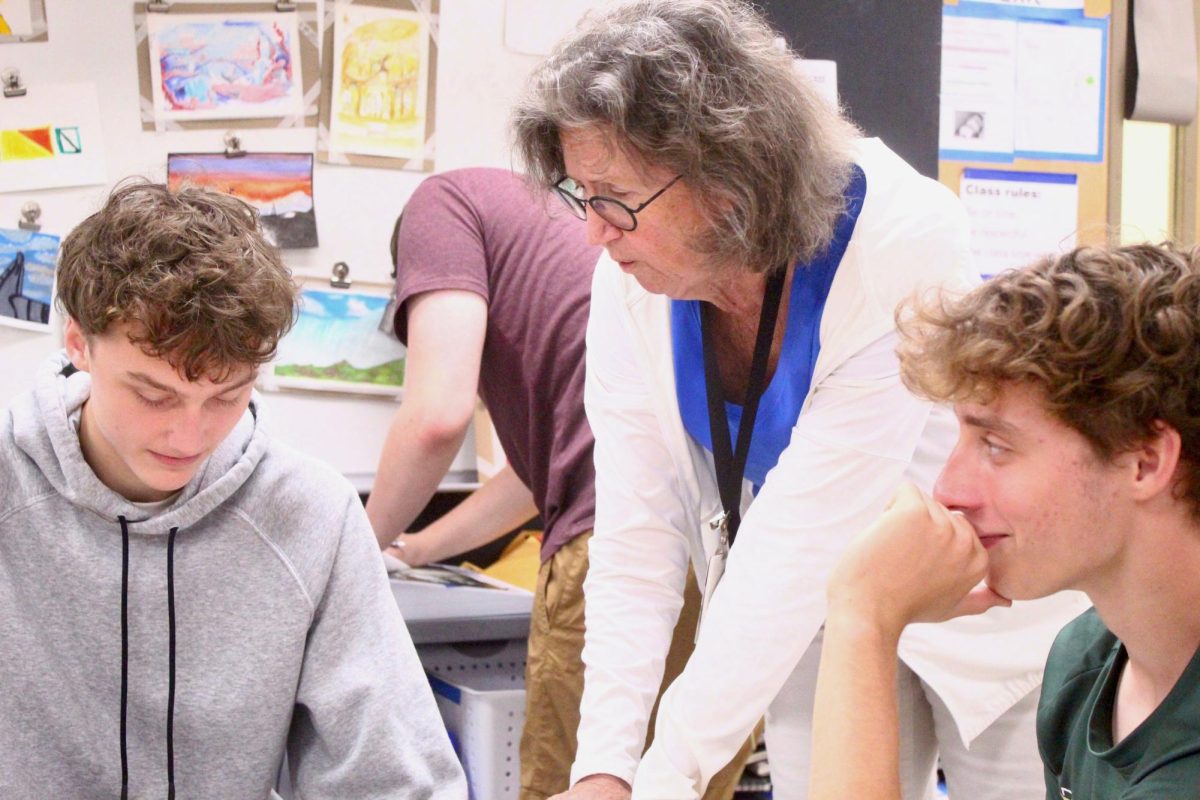
Each year, staffing decisions across the Hillsborough County district follow a comprehensive process in which both budget constraints and enrollment changes are considered. These decisions mainly affect which positions are retained and which are eliminated.
The process begins at the district level, where officials identify departments that require reductions based on enrollment numbers and program demand. Afterward, a list is sent to individual schools specifying which departments must cut positions.
After receiving this information, administrators notify teachers in the specified departments and ask whether they are willing to volunteer for the reduction. Volunteering means agreeing to leave their current position and enter the district reassignment system. If enough teachers volunteer to meet the required cuts, the process can move forward without further selection.
Teachers at Plant were notified that the reduction amount was 5.72 (six sections = 1.00, which equates to approximately five teaching positions). Human Resources follows these guidelines by subject area when determining placement for the pool: teacher volunteers, teacher with no score (new or re-hires), teacher with the lowest score in the subject area.
“After 10 years of teaching, I’ve seen how students express their creativity through art class,” says Katherine Johnson, an art teacher at Plant who will be leaving at the end of this school year. “I started as a half-time teacher, and when I switched to full-time, I had an average of 160 students per year. Staffing cuts are typically tied to enrollment, because of the number of students leaving the district and not enrolling in the plant, it isn’t enough to keep another art class, which is why it’s being cut.”
In many cases, there are not enough volunteers to leave. The school must then select additional teachers for reduction; making performance a factor. Those with lower evaluation ratings or limited test data are more likely to be selected.
Once the required number of teachers is selected, they are officially removed from their current positions and placed into a district-wide pool. This pool includes educators from across all schools in Hillsborough County who have been affected by the cut.
Teachers in the pool—staff awaiting new job assignments—move into the reassignment phase. Each teacher creates a list of preferred schools within the district, ranking where they would like to work next. These choices can include any school in the county, though availability depends on open positions and staffing at each location.
Placement from the pool operates similarly to a lottery system. While preferences are considered, there is no guarantee that a teacher will be placed at their top-choice school. Because the pool includes candidates from across the county, competition for certain schools or positions can be high.
Some teachers are assigned to schools other than their original location. In a large district, this can mean commuting significant distances, sometimes close to an hour. Flexibility in school choices often results in faster placement, while more limited preference lists can extend the time spent in the pool.
While the process provides a structured system for handling staff changes, it also creates uncertainty for staff and students. Teachers may need to quickly adapt to new environments, and schools must adjust to changes in staff and programs.
For many teachers at Plant, the impact of staffing cuts goes beyond placement. Classrooms represent years of relationships built with students and colleagues. Leaving a position often means leaving those connections behind. Even when reassignment can open new opportunities, the transition still leaves a sense of loss.
“I think you can turn any negative experience positive,” says Michael McWilliams, another teacher at Plant. “I’ve been teaching here for 28 years, I love this school and even have a tattoo of panther paw prints. I’ve also been coaching in basketball and football.”
Long-term teachers in particular may feel this shift more strongly. Time spent sponsoring clubs or coaching sports deepens their connection to the campus. At the same time, newer teachers who are placed into a pool may feel uncertainty about how to build those connections.
“I’ve only been teaching for a year, and it has been at Plant,” says Riley Kay, who teaches forensics. “Before this, I was a marine biologist for 5 years. I’ve enjoyed this year very much; I love my students and think the Plant community is amazing. I wish I could’ve stayed, but it is what it is.”
Newer teachers can feel a strong sense of loss as well. Even after a short time, relationships and classroom environments can form quickly, making departure difficult.
“I’ve been teaching for 11 years; this is my first year at Plant, which makes it my 12th year teaching,” says Mazhab Ferguson, from the math department. “I teach Statistics Honors and Math for College Liberal Arts. I understand why they do staff cuts, and I’m not taking it personally; the numbers make sense, and I don’t have test scores yet. I’m also relatively new. But I have enjoyed Plant in the time I’ve been here.”
The AVID program is being significantly affected by this year’s staffing cuts, adding further changes to campus. AVID focuses on organization and academic support, typically providing students with structured guidance throughout high school. These changes impact both students and teachers involved in the program.
“I heard about the teacher cuts from my friends,” Diogo Florentino-Mattos (12) says. “I was really surprised when I first found out, and when I found out specifically that AVID and Ms. Houston were being cut, I was really sad because she helped me a lot, even though I was never in AVID. She’s always just been there for my brother, who did take AVID before he graduated, and he really enjoyed his time with her. I think there’s definitely a bigger scope in staffing cuts, but AVID itself and other teachers definitely need to keep their jobs; they have their own lives, too. We really enjoy having them in our school, so it’s a hard hit for us.”
Students at Plant have relied on the program for years for academic support and class preparation. While the system is supposed to meet district needs, the removal of AVID has had a significant role in students’ lives, many of whom have valued and cherished Ms. Houston and the program.
“It’s affecting students because they’ve come to rely on the support of the class,” says Valerie Houston, the AVID teacher. “Not saying it’s the greatest class in the school, but the kids like the support we provide or the support we provide each other.”
Across campus, these changes are impacting everyone. Decisions being made at the district level shape the staff, students and course offerings at Plant. Their effects reach the entire school community. Although these teachers’ time at Plant has come to an end, their impact on the school and the students they’ve worked with will remain part of the campus community.
McWilliams (28 years) by Circles by Galia