For Generation Z, love exists in a very different world than it did for previous generations. Instead of handwritten notes or meeting someone by chance, relationships often begin with a swipe, a follow or a like. Social media has become deeply tied to how this generation communicates, builds connections and even defines romance. While technology has made it easier to meet people, it has also complicated what relationships look like today. This raises an important question: Has social media changed romance or is it quietly replacing it?
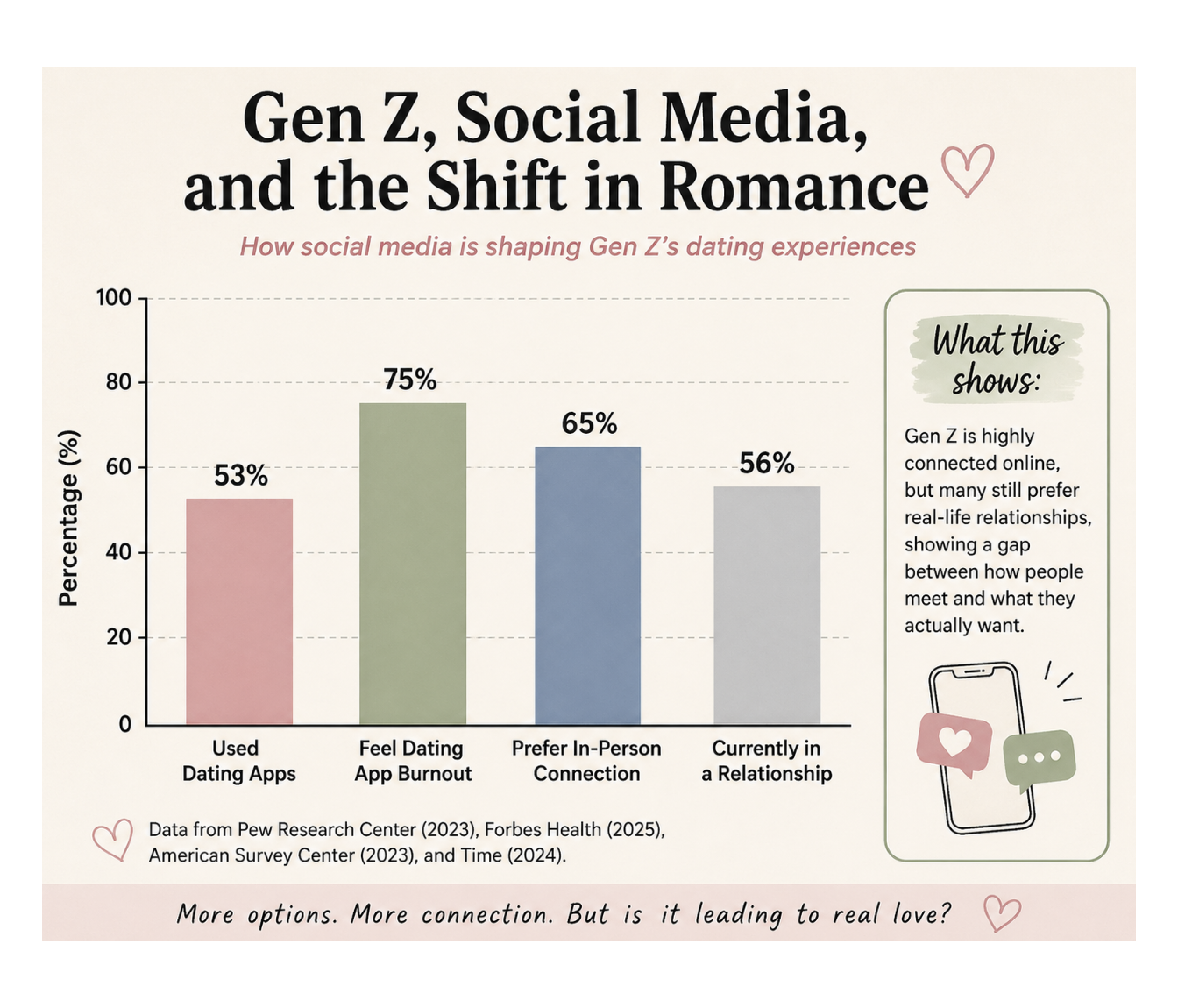
One of the biggest shifts in Gen Z dating is how relationships begin. Dating apps and platforms connected to social media are now a common starting point. According to the Pew Research Center, about 53% of young adults ages 18-29 have used a dating site or app. At first, this seems like an advantage. There are more options, more opportunities and more ways to connect. But having so many choices can also make relationships feel less meaningful. When someone can be replaced with a swipe, commitment can start to feel less necessary.
This idea connects to something many Gen Z users are experiencing: burnout. A survey conducted by Forbes Health found that a majority of Gen Z dating app users report feeling emotionally exhausted and frustrated with online dating. Instead of excitement, dating can feel repetitive and draining. Conversations can become predictable, and interactions may feel more like a routine than a real emotional experience.
Social media also changes expectations. Platforms like Instagram and TikTok often show highly curated relationships that look perfect on the surface. Research from Elon University suggests that social media can contribute to unrealistic expectations about relationships and communication. When people compare their real relationships to filtered versions online, it can lead to dissatisfaction. Instead of appreciating real moments, there is pressure to meet an unrealistic idea of what love should look like.
Another important factor is how much time Gen Z spends online. Studies from the Institute for Family Studies show that young adults today are spending less time socializing in person compared to previousgenerations. Less face-to-face interaction means fewer opportunities to build deeper emotional connections. Relationships that grow mainly through screens may lack the depth that comes from shared real-life experiences.
At the same time, Gen Z is not necessarily uninterested in romance. In fact, many still want meaningful relationships. Data from Forbes Health shows that most young adults still value long-term relationships, even if they are not actively pursuing them. This creates a contradiction. Gen Z wants love, but the way they interact socially may make it harder to achieve.
There is also evidence that fewer young people are dating overall. Research from the American Survey Center found that young adults today are less likely to be in relationships compared to previousgenerations. This trend, sometimes referred to as a “romantic recession,” suggests a broader cultural shift, not just a temporary change.
“It’s weird because we’re always connected online, but it still feels harder to form real relationships,” says Stella Medina (11).
However, it would be too simple to say that social media is entirely to blame. Some research, including reporting from Time, suggests that Gen Z is beginning to move away from dating apps and look for more authentic, in-person connections. Many young people are recognizing the downsides of constant online interaction and are starting to value real-life experiences more. In some ways, this could signal a return to more traditional forms of romance.
Still, the influence of social media cannot be ignored. It shapes how people communicate, how they present themselves and how they view others. It can create connections, but it can also create distance. It offers endless possibilities, but sometimes at the cost of depth and authenticity.
In the end, it may not be accurate to say that romance is “dead.” Instead, it is evolving. Generation Z is redefining what relationships look like in a digital world. Love still exists, but it may look quieter, more complicated and sometimes harder to find. Whether social media is hurting or helping romance depends on how it is used. The challenge for this generation is learning how to balance the convenience of technology with the authenticity of real human connection.